Warning: This article is rooted in the principles of Ayurveda and is intended for informational purposes only. It is not a substitute for professional medical advice, diagnosis, or treatment. Before making any changes to your diet or lifestyle, especially if you have a chronic condition, please consult your healthcare provider or a certified nutrition specialist.
At the core of any field of knowledge, there always lies a primary source. Sometimes this is a precise text containing specific tenets; at other times, it consists merely of recommendations that are difficult to grasp without the guidance of a qualified mentor. Explanations of such treatises were passed down from generation to generation, from teacher to student. This information was carefully guarded, kept away from outsiders, who not initiated into the discipline. The ancient science of healing, Ayurveda, is no exception; the work of the sage Charaka is considered one of its foundational pillars. Today, many myths surround the identity of Charaka: some claim he was a gifted healer, others describe him as a sage who received his knowledge from the gods, while some even elevate the author of the “Samhita” to the divine pantheon. In this article, we will explore who the legendary Charaka was and examine the contribution his seminal work made to the science of Ayurveda.
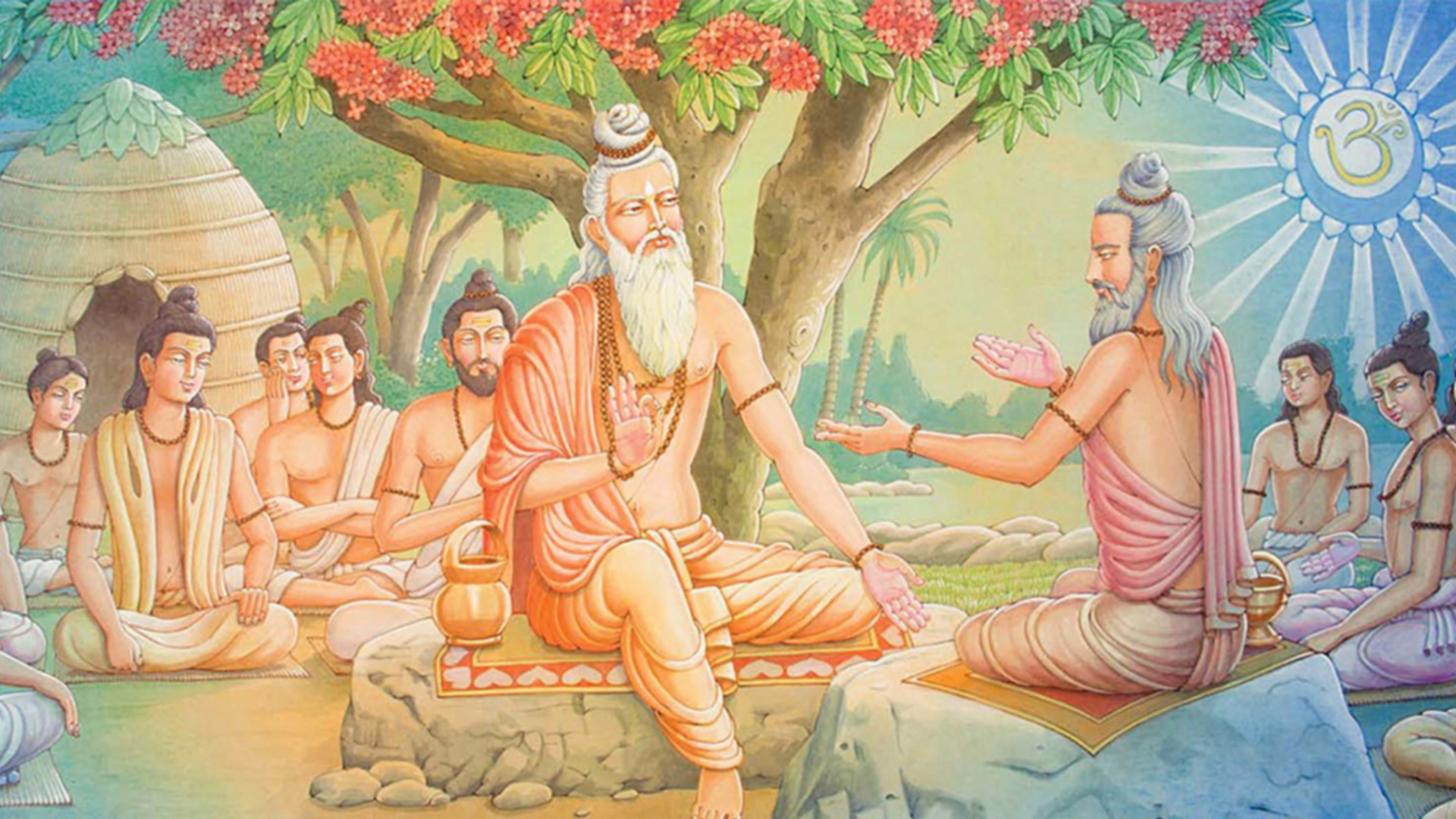
Charaka is a physician of ancient India
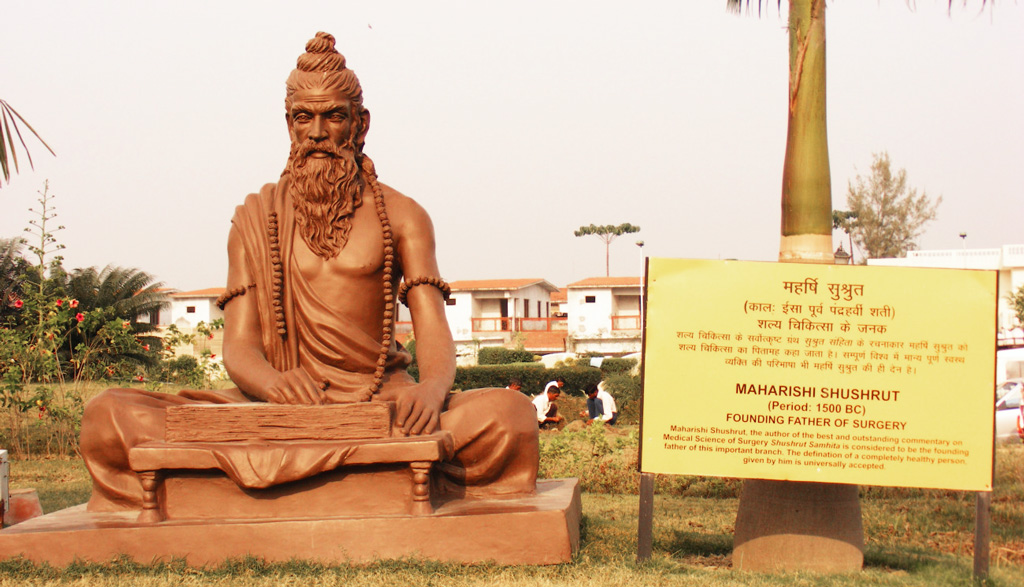
Ancient India is full of secrets and mysteries. It is perhaps difficult to find a country where people do not stop believing in miracles until old age. Ayurveda is no exception, which, like any science, is very practical and pragmatic, nevertheless it has its own legends. Two names are key to Ayurveda - Charaka and Sushruta. The works of these scientists became the foundation of the science of healing, and thanks to their efforts, knowledge has reached the present day. At the same time, Sushruta remains a largely historical person: it is known exactly when the doctor was born and when he left his earthly incarnation, the dates for the creation of his treatise on surgery have been established. All this cannot be said about his colleague named Charaka; such information has not been preserved.
The scientist Jan Meulenbeld, who dedicated many years to the study of Ayurveda in general — and the life of Charaka in particular—concluded that this figure was born in the region of modern - day Kashmir and lived during the 1st–2nd centuries CE. A brief digression is necessary here to understand why it is so difficult to definitively identify this individual: in ancient India, the term “charaka” was used to refer to any wandering physician or scholar. The history of the treatise attributed to Charaka is equally enigmatic. According to legend, medicine originated with the god Vishnu. In this tradition, Vishnu is said to have taken many incarnations (avatars) in the world — most notably Dhanvantari, a king of ancient Varanasi. It is with this incarnation of Vishnu that the birth of Ayurveda and other medical practices is associated. Today, the national day of Ayurveda is named in honor of this avatar: Dhanvantari Trayodashi.
According to tradition, Vishnu imparted the science of healing to the holy rishis, one of whom was Atreya. He, in turn, passed this medical knowledge on to his students. Among them was Agnivesa, who managed to preserve the teachings for future generations in the form of a book. Although this manuscript is now considered lost, it is the very work to which Charaka refers in his own text: “Agnivesakrite tantre Charakapratisamskrite”, which translates to “the tantra of Agnivesa, as edited by Charaka.”
It is reasonable to assume that Charaka was a physician who, unlike many of his itinerant colleagues, chose to edit an existing medical treatise. This is quite plausible, given that original texts often received little attention and knowledge was typically transmitted in a more traditional manner, directly from teacher to student. Charaka, however, took the initiative to expand upon the existing source, removing ineffective treatment methods and replacing them with more relevant medical discoveries. Such a pursuit of perfection was no accident.
There are two accounts regarding the true identity of this wandering healer. According to one version, he was none other than Patanjali, the author of the legendary “Yoga Sutras”. As a scientist, Patanjali sought to expand the body of existing knowledge — which explains his desire to preserve and build upon the work that had come before him. According to another version, the foundations of Ayurveda, as set forth in the “Charaka Samhita”, were imparted by Shesha—the king of all Nagas, a thousand - headed serpent. The “Bhagavata Purana” explains that Shesha is an avatar of Vishnu. “Among all the Nagas, I am Ananta”, says the Lord. Vishnu, who loves humanity with all his heart, wished to prevent suffering and disease; to protect his devotees, he bestowed upon them the most precious gift of all: the science of healing.
It is easy to see that Charaka always advocated for the idea that it is far better to prevent illness than to treat it. ”It is much more important to prevent the onset of disease than to seek a cure”, these words are attributed to the legendary Charaka. Safeguarding the health of his devotees is one of the purposes of Vishnu. For this reason, even today on Ayurveda Day in India “pujas” (ritual offerings) are performed in honor of this deity, with people seeking healing from him.
In any case, Charaka accomplished a tremendous amount of work; it is not, in essence, particularly important who he actually was—whether an ordinary wandering physician or an incarnation of a deity. Similarly, his personal motivations are of little consequence to us. If this sage of the past sought to go down in history, he certainly succeeded. If his goal was to preserve and expand knowledge for the benefit of future humanity, it is a more plausible scenario, given that such individuals are typically devoid of egoism and he achieved that as well. Thanks to his efforts, we now possess a step-by-step guide on how to care for the body, how to prevent illness, and what steps to take should an ailment strike. Today, the terms “Charaka” and “Ayurveda” are inextricably linked; in effect, the sage became the father of this ancient science by providing a clear and structured exposition of it. As for the specific contents of the “Samhita”, we shall explore them below.
Fundamentals of the medical treatise of Charaka
The ”Charaka Samhita” is a rather substantial treatise, comprising 8,400 verses divided into 12 chapters. The book consists of eight sections:
- Sutrasthana, or fundamental principles;
- Sharirasthana is a section dedicated to the body;
- Indriyasthana is a sensory perception;
- Nidanasthana — causes of diseases;
- Vimanasthana is a transmitter of disease;
- Chikitsasthana is a body treatment;
- Kalpasthana is a preparation of medicines;
- Siddhasthana is the attainment of happiness.
Although the author attempts to present a vast body of information as concisely and clearly as possible, the text may prove challenging for a modern reader to grasp. The work itself is remarkably multifaceted. It contains information on how future physicians should be trained and how a hospital ought to be organized. Significant attention is also devoted to personal hygiene as the foundation of a healthy life. In his work, Charaka addresses ethical issues and emphasizes the necessity of maintaining medical confidentiality. The treatise provides an overview of the fundamentals of anatomy and physiology, offers guidance on the initial examination of patients, and discusses methods for establishing a diagnosis. A separate section is dedicated to the selection of medicinal substances and the techniques for preparing them. In total, the sage describes more than 500 different medicinal preparations and their combinations.
In his work, Charaka emphasizes that the human body is composed of particles of universal intelligence, which interact with other elements and particles. At times, such interactions can lead to an imbalance of the “doshas” within the body, subsequently resulting in the onset of disease. By understanding the principles governing these combinations and knowing which types of interactions to avoid we can, to a significant extent, safeguard our lives and prevent the manifestation of illness. This treatise is so comprehensive that it seems there is no subject that has not been incorporated as a section or component of the “Samhita”.
In Charaka’s view, physicians should act as aids in the healing of a person’s mind—and, most importantly, as healers of their soul. The sage was convinced that health problems arise when a person’s state of mind deteriorates. To prevent this, one must live in accordance with moral ideals; the physician, too, must abide by these same principles.
A person’s health depends on their thoughts, lifestyle, and actions. According to ancient treatises, anyone who fails to reexamine their way of thinking and living is doomed to encounter illness again and each time in a more severe form. It is essential to grasp that any ailment is a consequence of our own behavior. We all like to imagine ourselves as ideal; yet, while failing to notice the “log in our own eye”, we eagerly set out to find a “speck” in the eyes of those around us. While the sages of the past would downplay their own merits, and sometimes even likening themselves to mere dust, at the same time modern people do the exact opposite. “This person isn't smart enough; that one isn't attractive enough” in this way, the cunning ego that resides within us seeks to highlight our virtues while concealing our flaws. And so, contrary to the teachings of ancient yogis, who advised keeping the mind and ego under control, we grant them complete free will.
Where might such a way of thinking lead? For some, it could result in isolation; for others, it might pave the way toward harmful habits. Learning to exercise self-control, to master one’s own mind, is essential not only for those seeking healing but for the healer as well. In this context, a medical professional must serve as an example, perhaps not a perfect ideal, but a model of how to manage one’s emotions. A practitioner who is overly emotional risks making an error in diagnosis, while one who is excessively anxious might prescribe an incorrect dosage of medication.
Sometimes, illness is necessary. It is given to a person so that they might "take a time-out," pause, look back, and reflect on their life. It is an opportunity to ask oneself: what is the actual purpose of my existence? What good or useful thing did I do, even just yesterday? Life should be filled with a meaning that transcends the endless pursuit of material well-being.
One cannot, like the Egyptian pharaohs, believe that everything one has accumulated will remain with one after departing this earthly realm. Each of us will leave behind a certain legacy, but what will it be? How will our family and loved ones remember us? Confronting such questions is always daunting and unsettling, yet it is both important and necessary in order to live a long, honorable, and healthy life.
The views expressed are based on traditional Ayurvedic texts and do not constitute medical advice.