Warning: This article is rooted in the principles of Ayurveda and is intended for informational purposes only. It is not a substitute for professional medical advice, diagnosis, or treatment. Before making any changes to your diet or lifestyle, especially if you have a chronic condition, please consult your healthcare provider or a certified nutrition specialist.
Ayurveda, an ancient medical science, rests upon three foundational pillars: the “Charaka Samhita”, the “Sushruta Samhita”, and the “Ashtanga Hridaya Samhita”. Having previously explored the works of the sages Charaka and Sushruta, it is now time to take a closer look at the contributions of another healer from the past—Vagbhata. He is the author of a treatise dedicated to healthy living, the purification of the body, and the preservation of youth, a work known as the “Ashtanga Hridaya Samhita”.
Sri Vagbhata is the author of the Ashtanga Hridaya Samhita.
Before discussing the treatise itself and its contents, I would like to touch upon the author, his personality and the achievements he attained in the field of medicine. It is known that Shri Vagbhata was born in 500 CE into the family of a physician named Simhagupta. Vagbhata’s father was a renowned healer who held the title of "vaidyapati." The medicinal formulas he developed were later incorporated into many medical textbooks. Vagbhata’s uncle, Ravigupta, was also a recognized expert in the field of medicine.
It was he who authored the medical treatise “Siddhasara”. It is no surprise that young Vagbhata, like his relatives, aspired to become a physician and help those in need. Unlike many others, he had access from an early age to the secrets of Ayurveda. These knowledge were carefully preserved by his father and uncle. His father taught him the rules for when and how to gather medicinal herbs, as well as how to store them. His uncle instructed him on how to combine these plants and how to prepare ointments and decoctions from them.
After acquiring his initial knowledge of Ayurveda, Vagbhata was placed under the tutelage of Avalokita, who was a true master of Ayurveda and a spiritual mentor. Avalokita revealed to his student the secrets of philosophy, astrology, and naturopathy. It is to Avalokita that the choice of our protagonist’s spiritual path is attributed. Although he was a descendant of a Brahmin lineage, Vagbhata’s teacher practiced Buddhism. He passed on his devotion to the teachings of the Buddha to his student, who followed the path described by Gautama Buddha for the rest of his life.
Vagbakhta gained fame when the daughter of one of the rulers named Sindha fell ill. None of the court doctors could help the king’s daughter, but Vagbhata succeeded. He quickly established the diagnosis and two weeks later completely cured the princess. The king's happiness knew no bounds. To thank the healer, Sindha gave him part of his state. Today this district is called Karchi, it is located in Pakistan, and in those years this territory became a real kingdom of Ayurveda.
Vagbhata and his disciples assembled an extensive library of treatises on Ayurveda and Aryan medicine. Unfortunately, most of these works were lost in a fire that occurred in the 13th century. In essence, Vagbhata did not merely establish an institute of Ayurveda; he founded an entire state, which drew people from all over India who wished to learn the art of healing. This Ayurvedic realm endured for about 40 years, but following an invasion by the Sakas, the city was destroyed, and Vagbhata himself departed for Ujjain.
It was there that the scholar began work on his treatise, the “Ashtanga-hridaya-samhita”. The project took about seven years to complete and was finished in another Indian region know as Kerala. The legendary healer spent the remainder of his life in this place. Furthermore, he established eight lineages, each of which focused on developing a specific branch of Ayurveda, all based on the “Ashtanga-hridaya-samhita”. The work became immensely popular; it was committed to memory, and even today, one can still find physicians in Kerala capable of reciting this classic text from heart.
“Ashtanga-hridaya-samhita” is a foundational text of Ayurveda.
Many people consider the ”Ashtanga Hridaya Samhita” to be a kind of summary of Ayurvedic knowledge, but that is not entirely accurate. As you may know, “Ashtanga” translates from Sanskrit as “eight”, while “Hridaya” means “heart”. In reality, this work by Vagbhata is the true heart of Ayurveda. Each chapter is dedicated to one of the eight branches of Ayurveda, so the name, “eight hearts”. Many other books have been written based on this text. Notably, the work has been translated into Chinese, Arabic, and German.
You may come across a legend according to which there was another work called “Ashtanga Sangraha”. They say that it is more voluminous and impressive, and the Ashtanga Hridaya Samhita is only a brief summary of it.
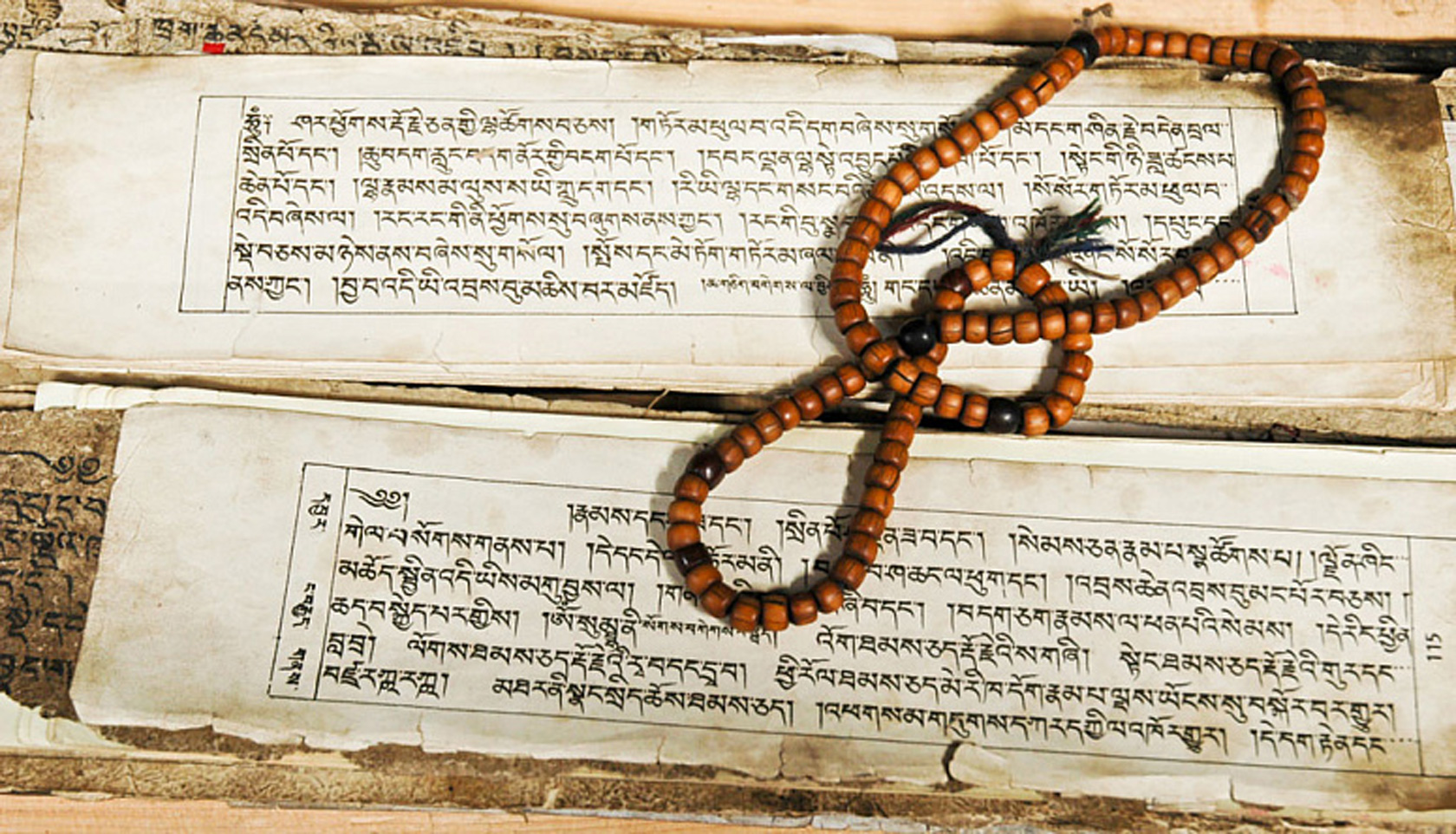
Sections of the “Ashtanga-hridaya-samhita”
The work consists of six sections in total. The first, titled “Sutra Sthana”, comprises 30 chapters and outlines the fundamental principles of Ayurveda. This section also covers various diseases, methods for treating them, and information on how to prevent the onset of illness.
The second section, titled “Sharira Sthana”, consists of 6 chapters that provide information on anatomy and physiology, as well as on dreams and the approach of death. “Nidana Sthana” is the third section, which contains 16 chapters dedicated to chronic diseases. “Chikitsa Sthana”, the fourth section, comprises 22 chapters describing the treatment of organic diseases. The following section, “Kalpa Siddhi Sthana”, outlines methods for preparing medicines. The final, sixth section focuses on the fundamental branches of Ayurveda. The treatise also contains information regarding surgery and rejuvenation techniques.
The “Ashtanga-hridaya-samhita” is the most frequently commented-upon text. These commentaries were authored by both Brahmins and physicians. Unfortunately, not all of them have survived to the present day. This is partly due to the fact that India was a British colony for a long period. The British sought to persuade the indigenous population to abandon Ayurveda, viewing it as a relic of the past and they wanted to replace natural remedies with imported medicines. Fortunately, they did not succeed; however, many Ayurvedic schools were closed, and numerous treatises were either destroyed or lost. Nevertheless, the “Ashtanga-hridaya-samhita” itself has endured, offering us a unique opportunity to engage with this great legacy from the past.
Key tenets of the “Ashtanga-hridaya-samhita”
One of the core tenets presented in the treatise is the importance of following “dinacharya”, or a daily routine. A well-defined schedule enables an individual not only to be productive and successfully fulfill their responsibilities but also to enjoy high-quality rest. Vagbhata advises rising at sunrise, during the “Brahma-muhurta” (the “hour of Brahma”). Naturally, this approach was originally rooted in the need to perform morning rituals, offer prayers, and bathe in a sacred river.
Today, not all of us have the opportunity and desire to follow the religious path, but it has been proven that people who get up early achieve great success and are less likely to be late for anything. In order to get up on time, the treatise recommends going to bed no later than 10-11 p.m. In general, the daily routine should be built in accordance with the daily rhythm. You need to get up at sunrise, go to bed shortly after sunset.
It is important not to overlook hygienic routines. While these are described in full detail, one should adapt them according to one’s own personal circumstances and capabilities. Few people would turn down a morning massage, yet the modern pace of life does not always make this feasible. However, there is one thing that should certainly not be neglected: exercise. The treatise clearly emphasizes the necessity of physical activity during the morning hours.
And there is one more important point that we often forget. A treatise states: “For a wise person, the entire world is an “Acharya” (teacher). Learn to accept its lessons”. Few people grasp this concept or incorporate it into their lives; instead, they tend to react to many things with hostility. Yet, by shifting one’s attitude toward a situation, by viewing it as a teacher, one can avoid a great deal of trouble.
This text also outlines a regimen for life throughout the year, detailing what is best to do in winter versus spring. The treatise teaches one to listen to one’s own body and pay attention to the slightest changes, making it possible to halt an illness or even prevent it from arising in the first place. Much attention is devoted to moral guidelines and rules for conduct within society.
From an Ayurvedic perspective, if a person leads a virtuous life, illness will not occur, as disease is considered a consequence of past misdeeds. The treatise states: “Those who wish to be healthy and happy must keep their greed, envy, and hatred in check, and exercise control over their sense organs.” It also outlines guidelines for fluid consumption and details the benefits and drawbacks of various dairy products.
Alcohol is addressed separately; it is emphasized that consuming it is akin to ingesting poison. Significant attention is given to diet. What one should eat and what is best avoided. The treatise covers various aspects of life, including intimate relationships. While many of the recommendations may seem strange or inapplicable to modern-day realities, one should not be too quick to draw conclusions. Remember that any procedure should be prescribed by a specialist and carried out strictly in accordance with their recommendations.
But now we can take on board advice on daily routine, drinking regime, as well as what and when to eat. In any business, you should avoid fanaticism: make changes in your life gradually. Don't rush, take care of yourself and your loved ones.
The views expressed are based on traditional Ayurvedic texts and do not constitute medical advice.