Warning: This article is rooted in the principles of Ayurveda and is intended for informational purposes only. It is not a substitute for professional medical advice, diagnosis, or treatment. Before making any changes to your diet or lifestyle, especially if you have a chronic condition, please consult your healthcare provider or a certified nutrition specialist.
The literal translation of the word "dosha" is "that which goes out of balance." Within each of us, three forces: vata, pitta, and kapha are interacting. When this interaction is balanced and harmonious, we enjoy robust health, a sense of well-being, and an uplifted mood. This state of the doshas is known as "sama-dosha." However, as soon as one of the doshas or, more commonly, two at once, begins to fall out of balance (due to an increase in one, accompanied by a proportional decrease in the others), it leads to various mental or physical ailments.
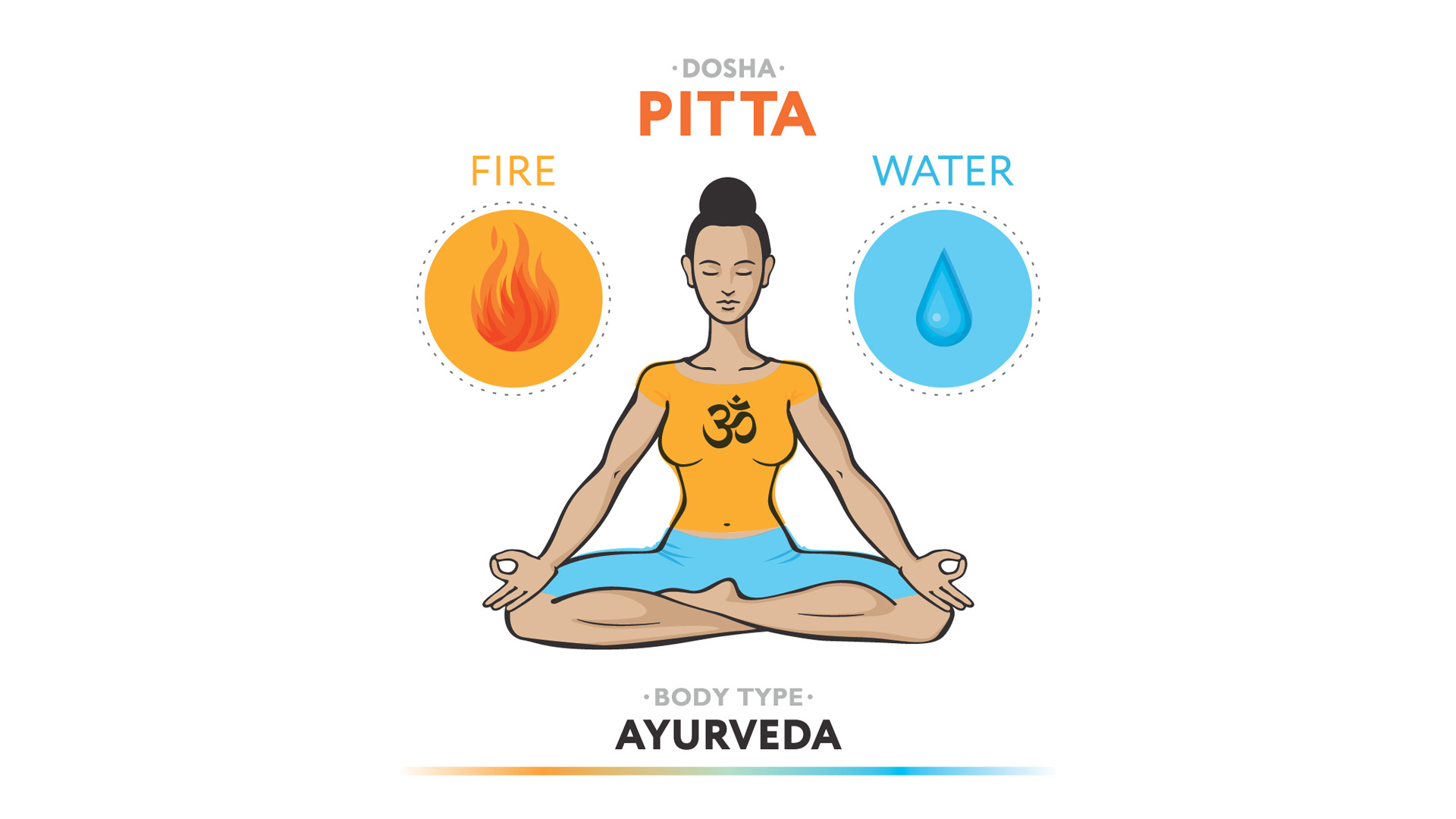
So, vata, pitta, and kapha are substances that emerge from various combinations of the primary elements. Thus, the vata dosha represents a combination of ether and air , pitta dosha is a combination of fire and water , and kapha dosha is a combination of water and earth .
Pitta characteristics
Pitta is responsible for the balance of two energies within the body: kinetic and potential. The characteristics of the pitta dosha include activity and digestive fire. The primary function of pitta in our body is the digestion or "cooking" of food (as well as the processing of thoughts, which may subsequently evolve into theories generated by the mind). Accordingly, the main sphere of pitta’s activity encompasses the enzymatic and endocrine systems.
Pitta caused imbalances
All health issues associated with a Pitta constitution are typically linked to heat and the fire element. Individuals of this type are more prone to fevers, inflammatory conditions, gastritis with hyperacidity, bulimia, jaundice, excessive sweating, hives and rashes, heartburn, ulcers, conjunctivitis, colitis, and pharyngitis.
People with a Pitta constitution tend to have a shorter lifespan. Their vital energy is consumed by excessive mental activity, perfectionism, aggression, and a constant drive for success.
Pitta increasing factors
Given that the primary function of Pitta is digestion, the most significant factor leading to its aggravation is the consumption of food that is unsuitable for one’s constitution, especially, large quantities of spicy food, acidic citrus fruits, fermented dairy products that are not fresh, and fatty or fried foods. Smoking and the consumption of acidic wines also contribute to an increase in Pitta (it is worth noting that the consumption of any alcoholic beverage tends to exacerbate imbalances in all the doshas).
Reducing pitta recommendations
- Avoid excessive heat.
- Avoid an excess of oil.
- Avoid an excess of moisture.
- Limit salt intake.
- Eat cooling, unspiced foods.
- Drink cold (but not ice-cold!) beverages.
- Engage in physical activity during the coolest times of the day.
Pitta dosha’s asanas
Regular physical exercise improves blood circulation and increases strength, endurance, and the body’s resistance. It helps with relaxation, which promotes restful sleep, benefits the heart and lungs, improves digestion, and assists the body in eliminating toxins through sweating and deep breathing. Exercise facilitates the intensive burning of calories, which is essential for maintaining a slim physique. Furthermore, it boosts one’s spirits, enhances mental acuity, and sharpens perception.
And yet, by performing exercises that are too intense, or ones that are unsuited to your physical constitution, you may end up weakening your health.
Since pitta tends to produce excess heat, avoid yoga disciplines that cause excessive sweating. Instead, choose cooling, relaxing practices. Avoid holding inverted poses for long periods of time, which create a lot of heat in the head. Try to practice during the coolest time of day.
Pitta asanas
Since the site of pitta concentration is the solar plexus, stretching exercises in this area are especially beneficial for people with a pitta constitution.
The most suitable asanas for pitta dosha include the following:
Matsiasana
- lie on your back on the mat;
- raise your pelvis and place your hands under it with your palms on the floor, trying to bring your elbows and shoulder blades together as much as possible;
- выталкивая грудину up, tilt your head back and place it on the top of your head;
- mouth and eyes are closed, feet are connected;
- weight is evenly distributed between the elbows and the top of the head;
- Remain in the asana for 30-60 seconds, then straighten your back and neck and lay on the floor.
Contraindications:
- hyperfunction of the thyroid gland,
- diseases of the spine
- high and low blood pressure.
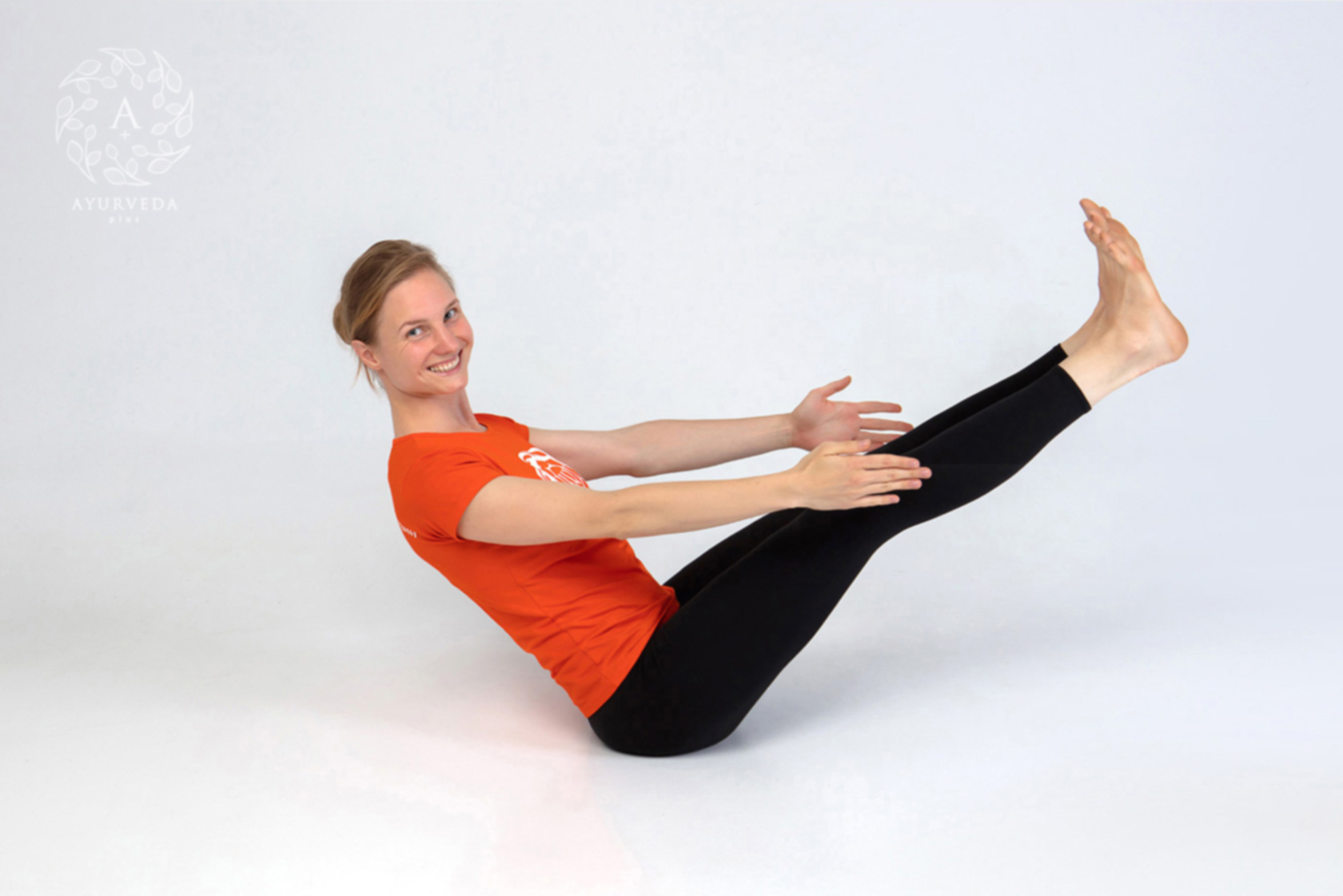
Paripurna Navasana
- sit on the mat;
- bend your legs at the knees and move your straight (!) back back (at an angle of 60 degrees from the floor);
- raise and straighten your legs at the same angle;
- pull your arms towards your feet and parallel to the floor;
- hold the asana for 30 to 60 seconds.
Contraindications:
- menstruation,
- pregnancy,
- diarrhea
- colic,
- intestinal diseases at the acute stage,
- appendicitis,
- hiatal hernia,
- acute pain in the lower back
- hypertension and other cardiovascular diseases.
In case of pathological lordosis of the back, you should first master Ardha Navasana.
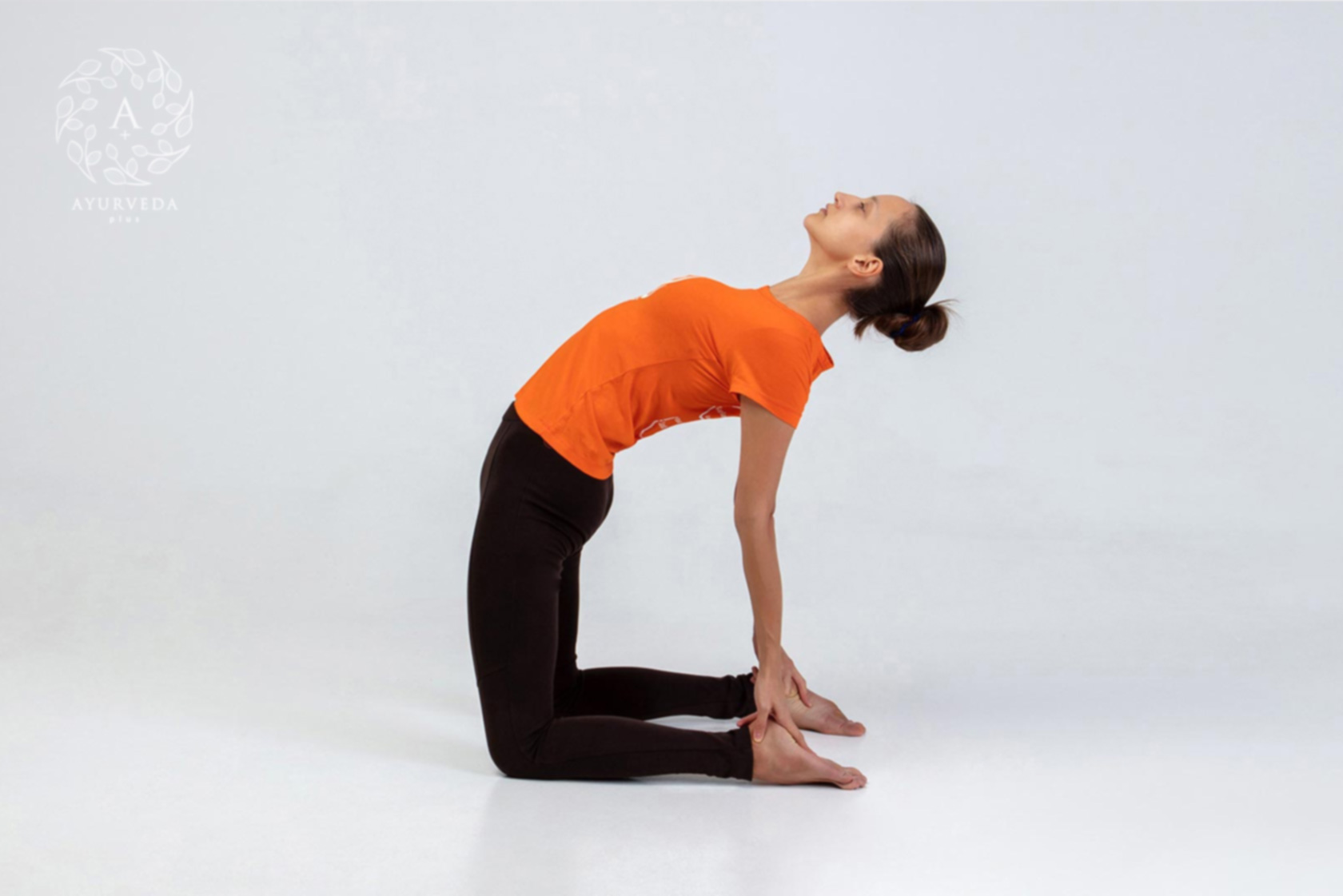
Ushtrasana
- kneel;
- separating them to the width of the pelvis;
- lower your pelvis onto your heels;
- place your hands a little further from your feet;
- gradually begin to push your pelvis up and forward, placing your palms first on your feet, then on your heels;
- in the extreme position, push the sternum up, stretching the ribs and releasing lower back;
- hold the asana for 30 seconds;
Exit in reverse order.
Contraindications:
- cerebrovascular accident,
- hyperfunction of the thyroid gland,
- hypertension.
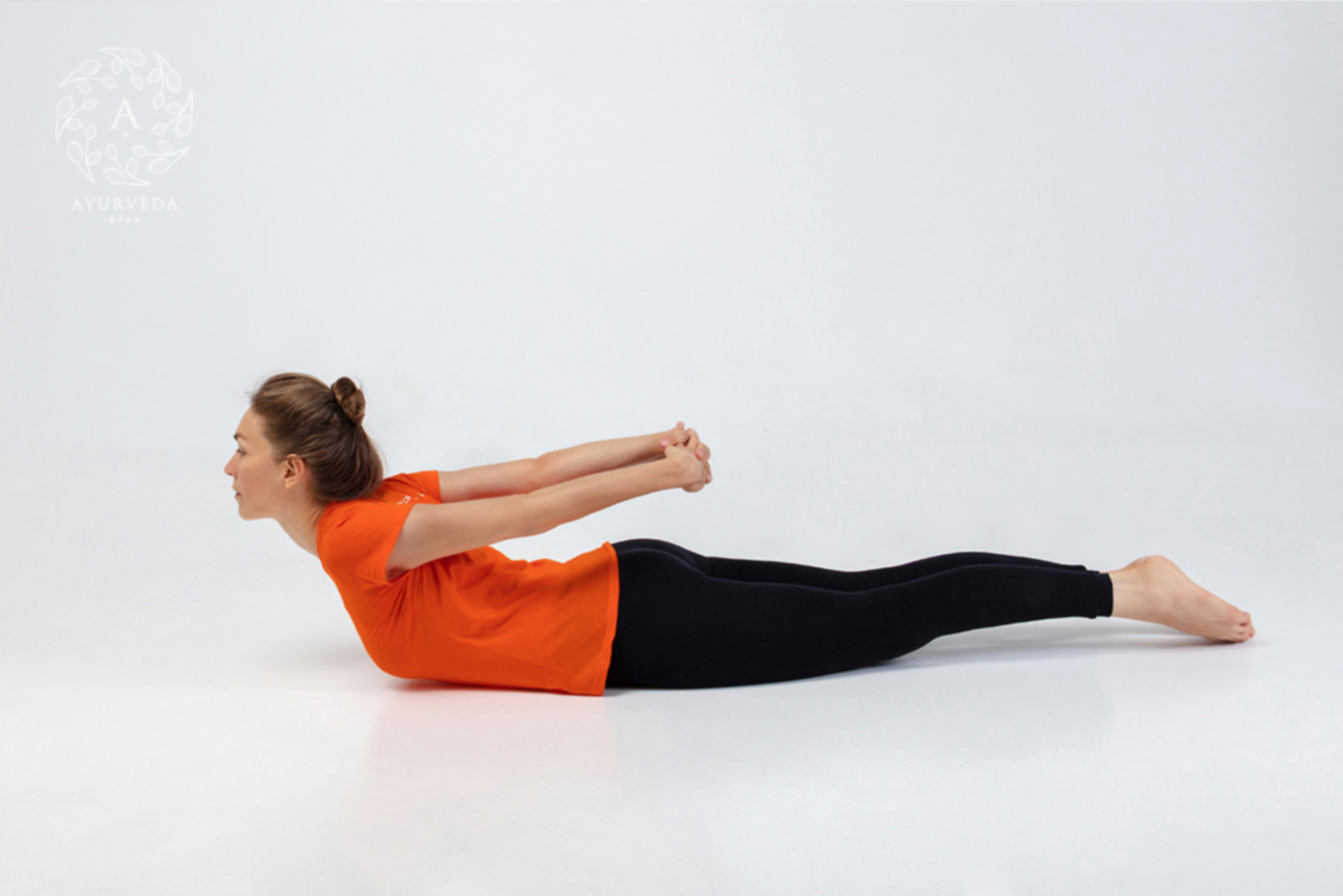
Salabhasana
- lie on your stomach on the floor;
- point your hands back;
- along the body;
- raise your head, chest and legs at the same time as high as possible;
- the muscles of the buttocks are compressed, the legs are straightened;
- hold the asana for as long as possible.
Contraindications:
- headache
- serious back injuries,
- increased temperature
- pregnancy,
- hernia.
In case of neck injuries, you should leave your head on the floor (look down), or place a folded blanket under your forehead.
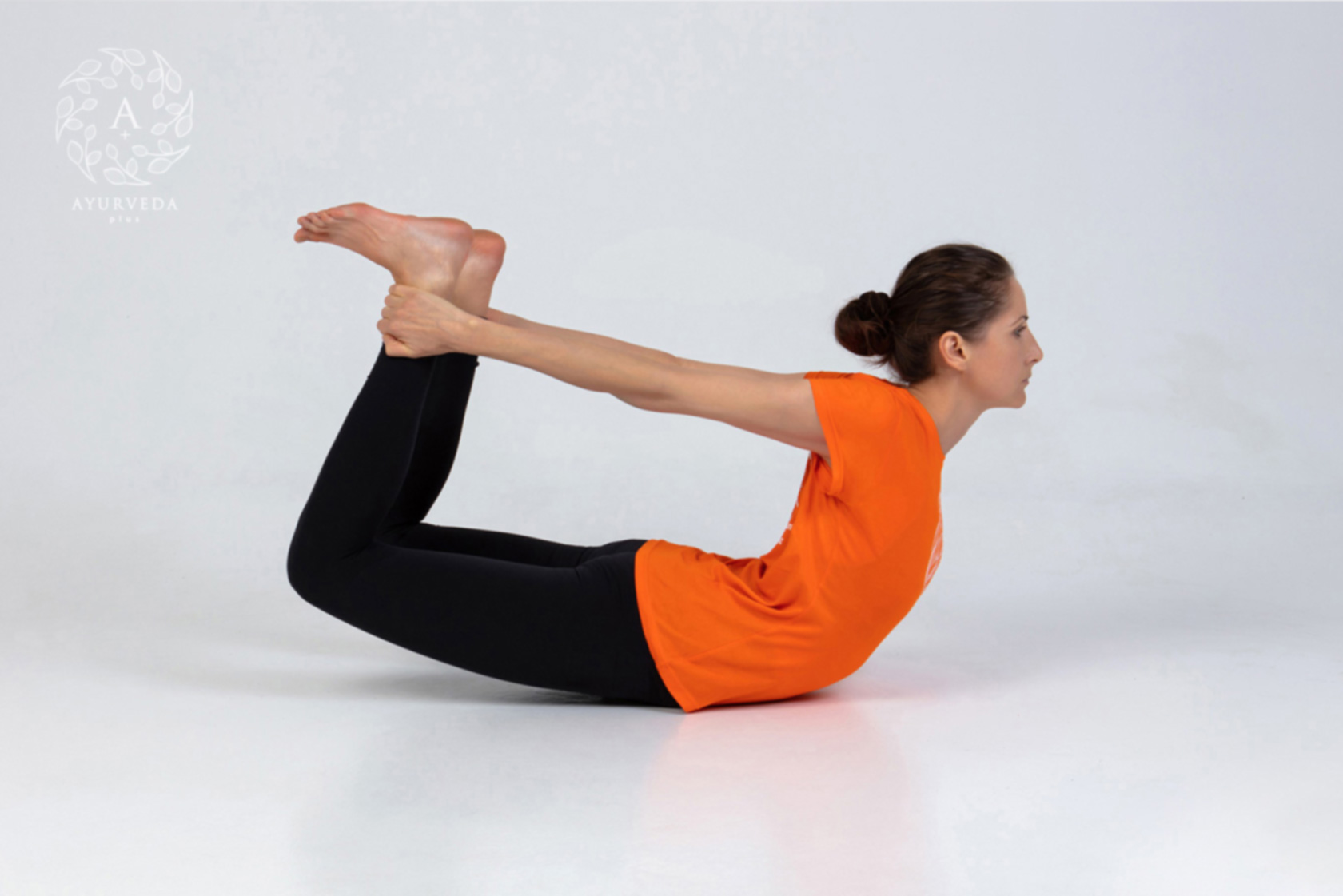
Dhanurasana
- lie on your stomach;
- bend your knees;
- raise your shins up;
- placing your hands behind your back, grab your ankles with the same hands (from the outside);
- as you exhale, bend over as much as possible, lifting your pelvis and chest above the floor;
- move your head as far back as possible;
- hold the asana for 20 seconds to 1 minute;
- exhale, release your ankles, slowly (!) lower your body and relax.
Contraindications:
- hernia
- intestinal tuberculosis,
- hyper function of the thyroid gland,
- stomach or duodenal ulcer,
- curvature of the spine.
People predisposed to hernias and hypertension should perform the asana very carefully.
Chandra Namaskar is a complex based on a smooth transition from one asana to another (you can find different variations on the Internet).
Not recommended:
- Sirshasana
- Sarvangasana.
- Halasana and other inverted asanas.
People with a Pitta constitution can engage in strenuous physical exercise, provided it does not cause them to overheat. Typically, after a vigorous workout, they feel hungry and thirsty, signs that their Pitta has been "stoked."
Other ways to cool and soothe Pitta
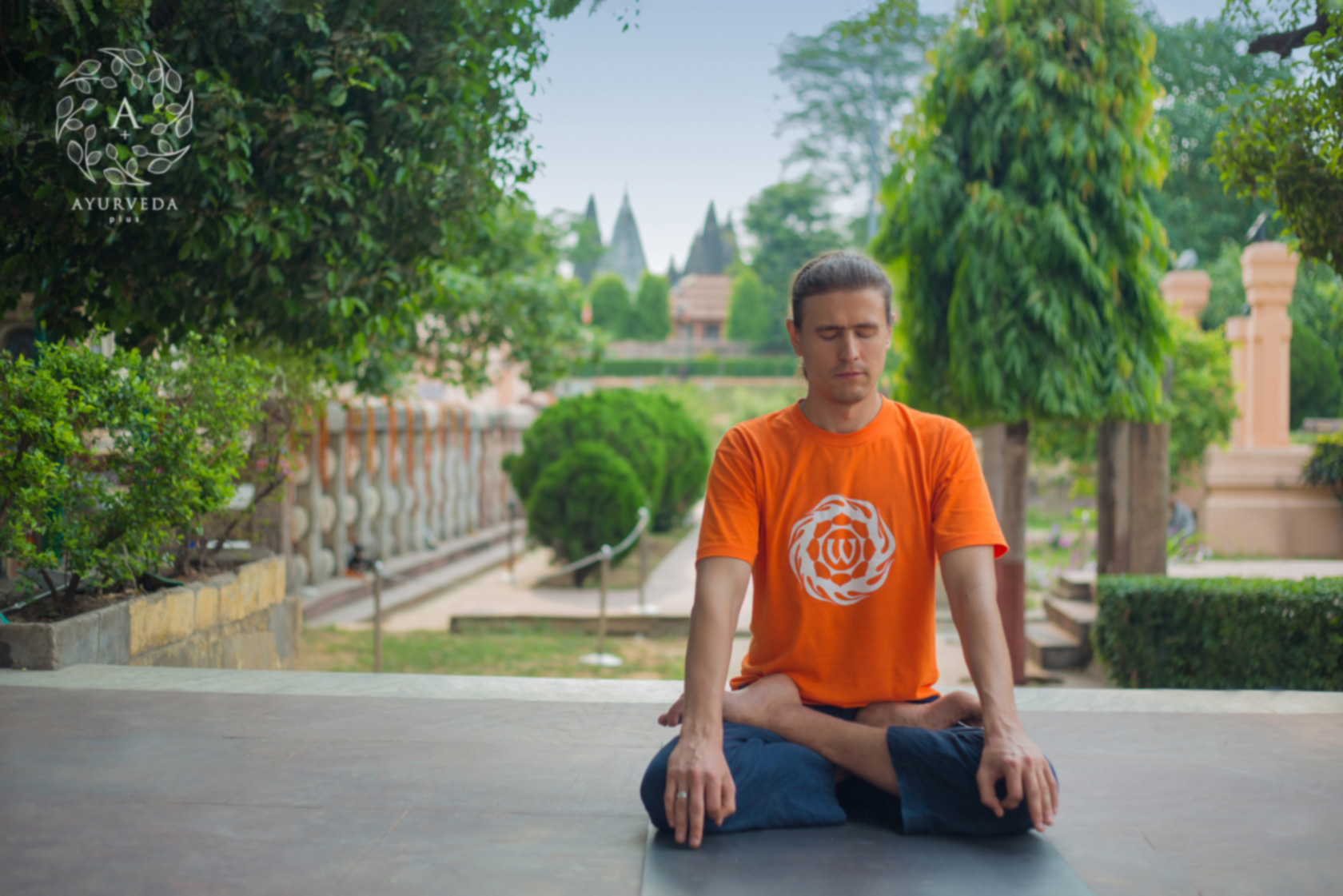
The Pitta dosha benefits from a calm practice, that is free from any tendency toward competition or displays of strength, as well as from quieting the mind. Meditation is an excellent tool for the latter; in this context, it can be understood as a form of mental training or as the focused concentration of attention (whether on an image, internal sensations, or a physical object).
Anapanasati is a form of meditation that involves focusing one’s attention on the breath, leading to a profound calming of the mind. While the technique itself can be quite challenging for beginners, you can start with the basics: sit with your back straight and your legs crossed (or use a chair), and direct your attention to the tip of your nose. To further engage your mind in this process, become aware of cool air entering through your nostrils and warm air exiting. If you find that your thoughts have carried your consciousness elsewhere, bring it back through a conscious effort of will.
However, the fastest and most effective way to rapidly cool down *pitta* is through *Sitkari* and *Shitali* pranayamas. These are special breathing techniques specifically designed to cool an agitated mind and an overheated body.
Sitkari Pranayama: Sit with your back straight and your legs crossed. Place your palms on your knees. Clench your teeth while stretching your lips into as wide a smile as possible. Inhale slowly and deeply through your clenched teeth, listening to the hissing sound. Exhale through your nose with your mouth closed. Repeat up to 20 times.
Shitali Pranayama: maintain the same body position. Extend your tongue out of your mouth and roll it into a tube. Then, inhale slowly and deeply through this tube. Exhale through your nose with your mouth closed. Begin by performing up to 9 cycles, gradually increasing the duration of the practice up to 10 minutes.
People with a Pitta constitution need to be respectful of the element of fire. They should keep this force in balance, in all its manifestations.
The views expressed are based on traditional Ayurvedic texts and do not constitute medical advice.